

“A Life-Long Hobby”: Donald Tomalia on the Origins and Impact of Dendrimer Chemistry
Donald Tomalia is one of the plenary speakers at the 13th International Dendrimer Symposium, IDS13, which takes place in Stockholm from 30 September to 2 October 2026.
He will kick off IDS13 with a story on the origins of dendrimer chemistry – a story where he himself played a fundamental role.
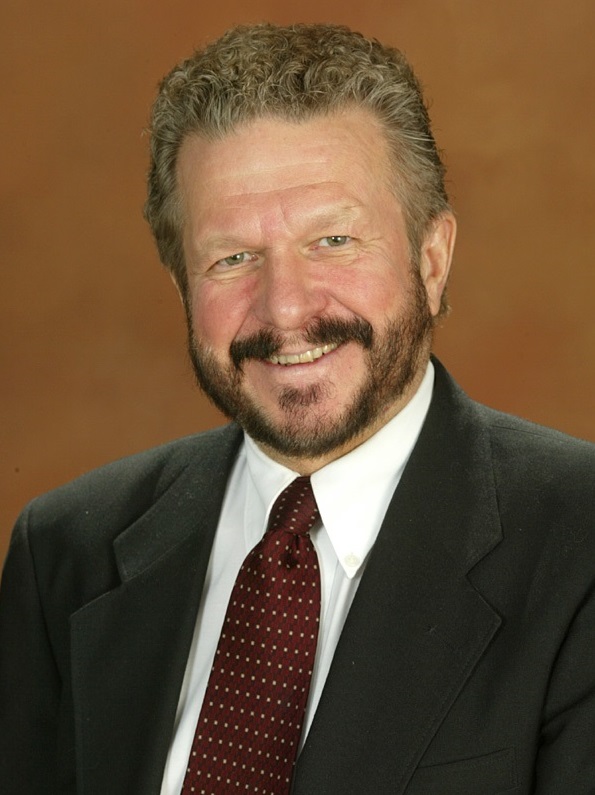
What is your role in the development of the field of dendrimer chemistry?
– The concept and synthesis of dendrimers evolved from my earlier academic experiences at the University of Michigan with precise small molecule chemistry and my dislike for the statistical nature of all traditional synthetic polymers. I first synthesized PAMAM dendrimers in the Dow Chemical R &D Labs in 1978, however, due to its proprietary nature it was not allowed to be published in the literature until 1985.
What are you most proud of from your career so far?
– Unarguably, it is the discovery of covalent-dendrimers in 1985! This story is told in great detail by Percec, Chem (2025), 11, 102870, Dec. 11, 2025.
What are your hopes for the field of dendrimer chemistry in the future?
– I hope to see it continue to produce important and consequential advancements/progress in nanomedicine, advanced materials (i.e., meta-materials), new intrinsic properties (e.g., anti inflammatory targeting, non-traditional intrinsic luminescence (NTIL), etc.). I really hope it will enhance the human condition in some special way!
What do you do today?
– In addition to wood working and gardening, I work full-time managing a small nanotechnology company called NanoSynthons LLC located in Mt. Pleasant, MI, USA. I also really enjoy working in the lab as much as possible!
What will you speak about at IDS13? Who should come to listen to your talk?
– The title of my lecture will be: “The Consequences of a Major Discovery- Covalent Dendrimers”. It will cover some historical, as well as important scientific advancements/progress that resulted due to this dendrimer discovery.
How did you decide to work with chemistry?
– As a person who deals with ADHD, I am known to have a tendency to become easily bored and non-productive when I feel I have solved a problem. The person who knew me best, my mother, convinced me to pursue a career which would present a continuous flow of new challenges and would always have unanswered questions. Since “chemistry is essentially the basis of all life,” this area was very attractive to me and really seemed to fit my needs. After practicing approximately seven decades of chemistry, I feel like I have never had to work a single day in my life, but instead was blessed by a life-long hobby that I have enjoyed with a passion.
Who is your favorite historical chemist (who is not alive today)?
– Without a doubt it is J.J. Berzelius! His seminal hypothesis in 1832 proposed that the synthesis of any new molecular architecture would invariably lead to new molecular features, properties, behaviors and other possibilities. This dendrimer discovery story literally describes the recent reality of this historical Berzelius hypothesis.
Is there anything else that you would like to add?
– I would like to thank the Swedish Chemical Society and Michael Malkoch (i.e., Polymer Factory) for allowing us to share this dendrimer discovery story with your readers, as well as the IDS-13 audience! I really look forward to seeing everyone in Stockholm this September, 2026!
Read more about the history of dendrimer chemistry here:
D.A. Tomalia, Pharmaceutics, (2025), 17, 403: Dendrimers, Dendrons, and the Dendritic State: Reflection on the Last Decade with Expected New Roles in Pharma, Medicine, and the Life Sciences | MDPI
IDS13 is arranged by KTH Royal Institute of Technology. The meeting takes place at Courtyard by Marriott Kungsholmen in Stockholm. Read more and register here: https://ids13.se/